
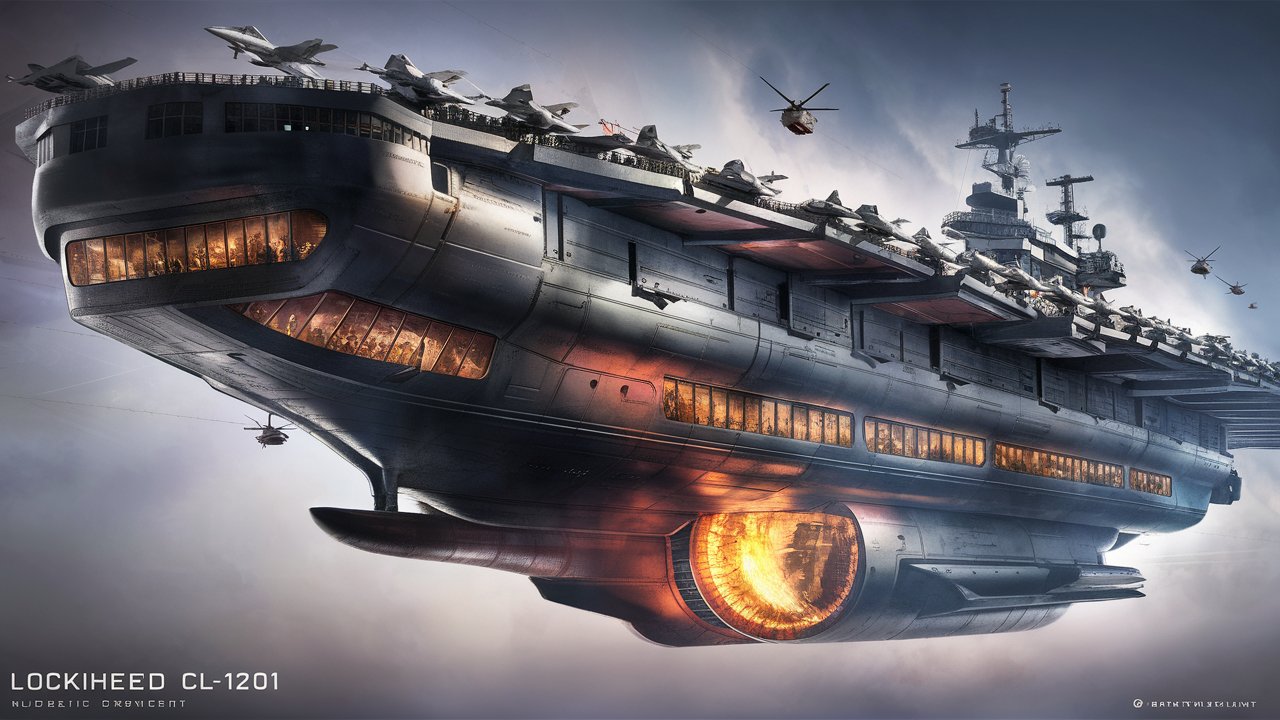
The Lockheed CL-1201 remains one of the most ambitious aerospace concepts ever designed. Proposed during the late 1960s by engineers at Lockheed Corporation, the CL-1201 envisioned a nuclear-powered flying aircraft carrier capable of staying airborne for weeks while deploying dozens of smaller aircraft. This massive concept aircraft pushed the boundaries of aviation engineering, combining nuclear propulsion, colossal wingspan, and unprecedented payload capabilities.
Although the CL-1201 was never built, the design continues to fascinate aerospace enthusiasts, historians, and engineers. The aircraft represents a bold vision of strategic air mobility, airborne command platforms, and near-permanent flight capability. In this comprehensive guide, we explore the design, capabilities, technological innovations, and strategic implications of the Lockheed CL-1201 concept.
The Origins of the Lockheed CL-1201
The Lockheed CL-1201 concept emerged during the height of the Cold War, a period defined by intense technological competition between global superpowers. Military planners sought revolutionary solutions capable of delivering continuous global presence, rapid deployment capability, and airborne command infrastructure.
Lockheed engineers proposed a solution unlike anything previously conceived. Rather than relying on conventional jet propulsion alone, they envisioned an aircraft powered by a compact nuclear reactor, enabling extraordinary endurance. The aircraft could theoretically remain airborne for over 40 days without landing, fundamentally redefining strategic aviation operations.
This concept evolved from earlier research programs exploring nuclear-powered aircraft propulsion, where heat from a reactor would generate energy for propulsion systems. While the United States eventually abandoned nuclear aviation projects due to safety and cost concerns, the CL-1201 represents one of the most advanced conceptual designs from that era.
Unprecedented Size and Structural Design
One of the most remarkable aspects of the Lockheed CL-1201 was its astonishing scale. Engineers designed the aircraft to dwarf every airplane ever constructed.
Massive Wingspan
The CL-1201 featured an estimated wingspan of approximately 1,120 feet (341 meters)—more than three times larger than modern jumbo jets. Such an enormous wing structure would provide the necessary lift to support the aircraft’s immense weight.
Aircraft Weight
The projected maximum takeoff weight exceeded 11 million pounds, making it the largest aircraft ever proposed in aerospace history. To support this mass, engineers planned a high-strength composite and reinforced metal structure capable of withstanding extreme stresses.
Multi-Deck Internal Layout
The interior design resembled a flying naval vessel, complete with multiple decks dedicated to:
-
Aircraft storage hangars
-
Crew living quarters
-
Maintenance facilities
-
Command centers
-
Nuclear reactor shielding
This layout effectively turned the CL-1201 into a self-contained airborne base of operations.
Nuclear Propulsion System
The defining feature of the Lockheed CL-1201 was its nuclear propulsion system. Instead of relying entirely on conventional jet fuel, the aircraft would use a nuclear reactor to generate heat, powering turbofan engines and onboard electrical systems.
Reactor-Driven Energy
The onboard reactor would produce enormous amounts of thermal energy. This heat could be transferred to turbines or heat exchangers, allowing the engines to operate continuously without traditional fuel limitations.
Shielding and Safety
To protect the crew, engineers designed extensive radiation shielding, primarily using heavy materials like lead and specialized alloys. The reactor compartment would be located deep within the aircraft structure to minimize exposure.
Operational Endurance
With nuclear propulsion, the CL-1201 could theoretically remain airborne for several weeks, limited only by crew endurance and maintenance requirements.
Airborne Aircraft Carrier Capabilities
Another revolutionary concept integrated into the CL-1201 design was its ability to function as a flying aircraft carrier.
Internal Fighter Deployment
The aircraft could carry up to 22 fighter jets inside its massive wings and fuselage. These smaller aircraft would launch and recover using specialized docking systems.
Strategic Air Operations
This airborne carrier concept offered several advantages:
-
Rapid deployment anywhere on Earth
-
Continuous aerial patrol capability
-
Reduced dependence on ground bases
-
Enhanced survivability during conflict
The CL-1201 would effectively act as a mobile airbase in the sky, capable of supporting extended combat missions.
Crew and Onboard Infrastructure
Operating such a massive aircraft required a large and highly specialized crew.
Estimated Crew Size
Design studies suggested the aircraft would require approximately 400 crew members, including:
-
Pilots and navigators
-
Engineers and reactor specialists
-
Aircraft maintenance technicians
-
Command and communication personnel
Self-Sustaining Facilities
Because missions could last weeks, the aircraft would include extensive onboard infrastructure:
-
Sleeping quarters
-
Medical facilities
-
Food preparation areas
-
Recreation spaces
This design transformed the CL-1201 into a self-sustaining airborne community.
Variants of the CL-1201 Concept
Lockheed explored several potential variants of the CL-1201 platform.
1. Strategic Transport Version
This configuration focused on large-scale cargo transport, capable of delivering enormous payloads across continents without refueling.
2. Missile Launch Platform
Another concept envisioned the aircraft as an airborne ballistic missile launch system, providing strategic deterrence and mobility.
3. Command and Surveillance Platform
A command variant would serve as an airborne headquarters, coordinating global military operations with advanced communication systems.
Each variant emphasized the flexibility and adaptability of the CL-1201 platform.
Engineering Challenges
Despite its visionary design, the CL-1201 faced enormous engineering hurdles.
Structural Stress
Constructing an aircraft of such immense size required materials capable of withstanding extreme aerodynamic loads and wing bending forces.
Reactor Safety
Integrating a nuclear reactor into an aircraft posed significant safety concerns, particularly during potential crashes or emergency landings.
Operational Costs
The projected cost of developing and maintaining the CL-1201 would have been astronomically high, limiting its practicality.
Because of these challenges, the concept remained strictly theoretical.
Why the Lockheed CL-1201 Was Never Built
Several factors prevented the project from moving beyond the design phase:
-
Safety concerns surrounding nuclear propulsion
-
Rapid advancements in missile technology
-
High development costs
-
Environmental and political considerations
As intercontinental ballistic missiles and satellite systems became more effective, the need for such a massive airborne platform diminished.
Legacy of the Lockheed CL-1201
Although the aircraft was never constructed, the CL-1201 concept remains one of the most fascinating proposals in aviation history.
The project demonstrated the extraordinary ambition of Cold War aerospace engineering and influenced later research into:
-
Large strategic transport aircraft
-
long-endurance airborne platforms
-
modular airborne mission systems
Today, the CL-1201 stands as a symbol of bold technological imagination and visionary aerospace design.
Conclusion
The Lockheed CL-1201 represents one of the most ambitious aircraft ever conceived. Designed as a nuclear-powered flying aircraft carrier, it pushed engineering boundaries far beyond conventional aviation. With its immense wingspan, multi-deck internal structure, and weeks-long flight endurance, the CL-1201 embodied the era’s pursuit of technological dominance and global reach.
Although practical limitations prevented its construction, the concept continues to captivate engineers and aviation enthusiasts. The CL-1201 remains a testament to what aerospace innovators can imagine when they challenge the limits of technology and redefine what flight could become.
FAQ: Lockheed CL-1201
What was the Lockheed CL-1201?
The Lockheed CL-1201 was a conceptual nuclear-powered super-aircraft designed to function as a flying aircraft carrier capable of remaining airborne for weeks.
How large was the Lockheed CL-1201?
The aircraft was proposed with a wingspan of about 1,120 feet, making it the largest aircraft design ever envisioned.
Was the CL-1201 ever built?
No. The project remained a concept study and never progressed to the prototype stage.
How would the aircraft be powered?
The CL-1201 was designed to use a nuclear reactor to generate energy for propulsion and onboard systems.
What was its main purpose?
The aircraft was intended to serve as a long-endurance airborne base capable of launching fighter jets, transporting cargo, and coordinating military operations.